Song Structure Explained: Parts, Patterns, and Examples
Song structure gives every section a job. Learn how verses, pre-choruses, choruses, bridges, and outros work together, then choose a pattern that supports the story your lyrics want to tell.

The short answer: give every section one job
Song structure is the order and repetition of a song's sections. A beginner-friendly starting point is Verse–Chorus–Verse–Chorus–Bridge–Chorus: verses add story details, the chorus states the emotional center, and the bridge creates contrast before the final return. You can change the pattern, but each section should make the listener understand what happens next.
- Use verses to show scenes or new information
- Use the chorus for the memorable emotional idea
- Use a pre-chorus to raise energy when needed
- Use a bridge to change perspective or texture
- Choose repetition that supports the song's payoff
1. What is song structure?
Song structure is the blueprint that arranges a lyric and its musical sections over time. It answers a practical question: when should the listener hear a new scene, the main hook, a change in energy, or a final conclusion? Structure is not a rulebook that makes every song sound the same. It is a set of containers that helps each idea arrive at the right moment.
Think of a song as an emotional journey rather than a stack of rhyming lines. The verse can place the listener inside a situation, the pre-chorus can narrow the focus or build pressure, and the chorus can deliver the sentence the whole song has been moving toward. Once the jobs are clear, writing and revising become easier because you know what each section must add.
- Write one sentence describing the emotional change in the song.
- Give each section a different job before writing every line.
- Treat the first structure as a draft that can change after you hear it.
2. The main parts of a song and their jobs
The most common parts of a song are verse, pre-chorus, chorus, bridge, and outro. Not every song needs all five. A verse usually carries specific story information; a chorus repeats the central idea; a pre-chorus creates a lift into the chorus; a bridge introduces contrast; and an outro closes, extends, or deliberately leaves the song unresolved.
Labels are useful only when they describe what the listener hears. Two sections can have different names but perform the same job, and an instrumental drop can replace a traditional bridge. When planning lyrics, ask what changes between sections: the scene, the emotional intensity, the melody, the point of view, or the amount of repetition.
- Let verse two reveal a consequence or new perspective.
- Keep the chorus recognizable even when its final wording changes.
- Remove a section if it repeats information without adding movement.
Try the Song Structure Generator — to sketch a timed layout before you fill it with finished lyrics.
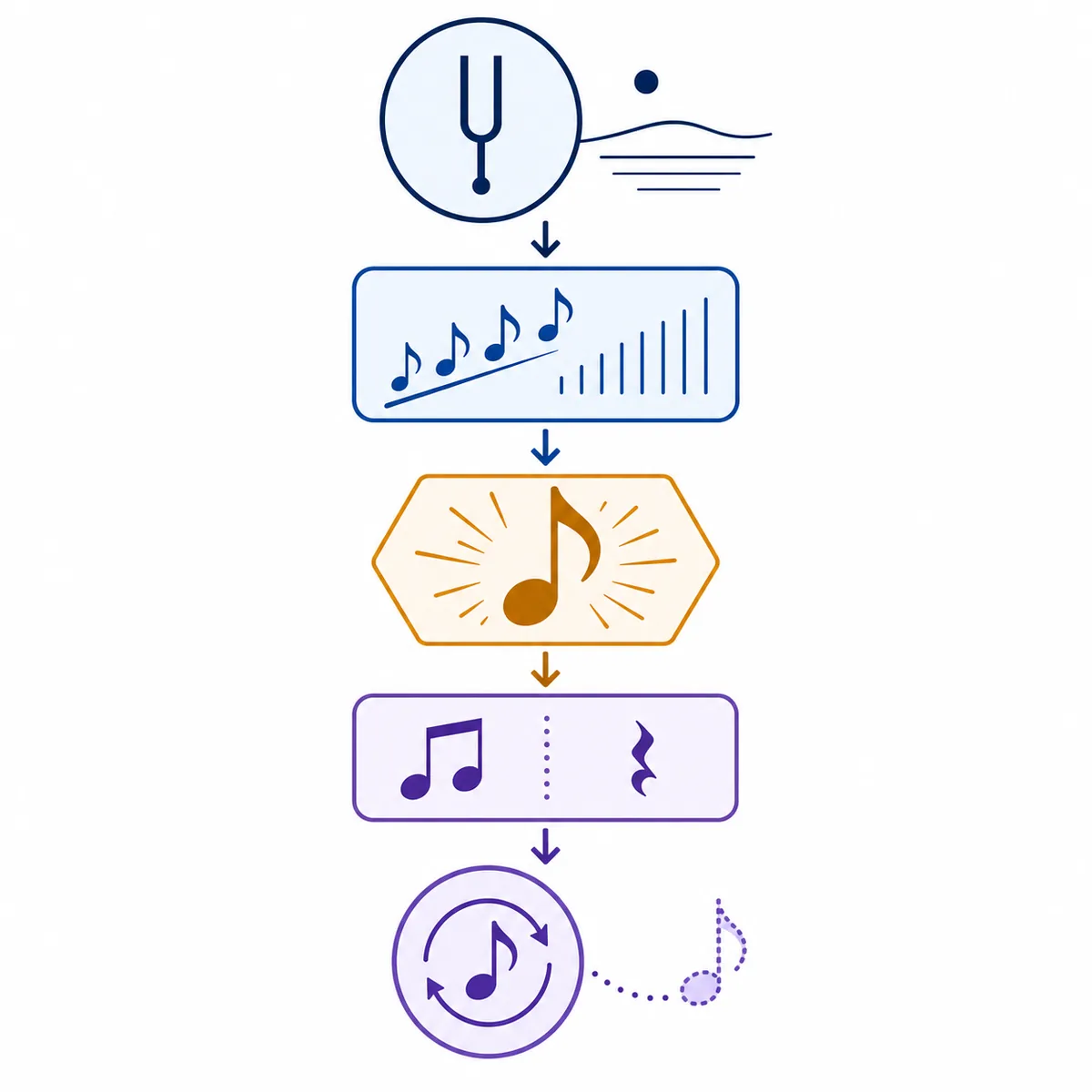
| Section | Main job | Useful question |
|---|---|---|
| Verse | Show the scene or story | What is happening now? |
| Pre-chorus | Raise tension or anticipation | Why should the listener lean forward? |
| Chorus | State the emotional center | What should be remembered? |
| Bridge | Create contrast or a new view | What has not been said yet? |
| Outro | Close, extend, or leave an echo | What should remain after the last line? |
3. Common song structure patterns
A classic pop pattern is Verse–Chorus–Verse–Chorus–Bridge–Chorus. It works because the verses create context, the chorus gives the listener a repeated destination, and the bridge refreshes the final return. A shorter version, Verse–Chorus–Verse–Chorus, is useful when the story is simple or the track needs to move quickly.
Other arrangements can begin with a chorus, use a pre-chorus before every hook, or place a bridge before the last chorus. Rap, folk, EDM, and experimental songs may rely on verses, hooks, drops, sections, or repeated motifs rather than a standard radio form. The best pattern is the one that matches the song's energy and gives the most important line enough space to land.
- Start with Verse–Chorus–Verse–Chorus–Bridge–Chorus when you need a reliable first draft.
- Use a chorus-first opening when the hook is the strongest part of the idea.
- Use a shorter form when repetition already creates enough momentum.
4. How to choose a structure for your lyrics
Begin with the song's promise: what should the listener understand or feel by the end? If the idea depends on a story unfolding, use verses that reveal information and a chorus that states the emotional truth. If the idea is a single bold statement, a chorus-first or hook-driven structure may work better. If the mood must gradually intensify, add a pre-chorus or a bridge that changes the musical texture.
Next, make a one-line plan for each section. For example: Verse 1 shows the empty apartment, the pre-chorus admits the speaker is avoiding a call, the chorus repeats the decision to stay silent, Verse 2 shows the old routine, and the bridge admits that silence has a cost. This outline prevents every section from explaining the same feeling in slightly different words.
- Choose the structure after identifying the hook, not before understanding the idea.
- Make verse two change the time, location, consequence, or point of view.
- Read the outline aloud and listen for a clear rise, release, and return.
Read the seven-step lyric writing guide — for a fuller process from idea and structure to revision.
5. Use a simple example before polishing lines
Suppose the core idea is missing a friend after moving to a different city. The structure can carry the emotional progression before any perfect rhyme is written. Verse 1 shows the first night in a new apartment, the chorus connects both people under the same moon, Verse 2 introduces an old voice message, and the bridge admits that staying close now requires deliberate effort.
This kind of outline also makes collaboration with an AI lyric tool more useful. You can provide the intended sections, their jobs, the genre, and the emotional turn instead of asking for a vague song. After generating a draft, keep the structure as a map, not as a command: move or remove sections when the actual lyric sounds repetitive or rushed.
- Write the section purpose in plain language before searching for rhymes.
- Keep one recurring image so the chorus feels connected to the verses.
- Use a draft generator for options, then make the final structural decisions yourself.
Explore chorus and hook ideas — when the song outline needs a stronger emotional center.
Worked example: turn one idea into a song structure
Before writing rhymed lines, map the emotional movement of a song about missing a friend after a move:
- Song promise
- Distance changes the routine, but small habits keep the friendship present.
- Verse 1
- The first night in a new apartment; two mugs are unpacked by habit.
- Pre-chorus
- The speaker sees an unsent message and almost calls.
- Chorus
- Both people look at the same moon from streets that no longer meet.
- Verse 2
- A voice message arrives during the old weekly coffee time.
- Bridge
- The speaker admits that staying close now requires deliberate effort.
The outline already has progression, recurring imagery, and a chorus payoff. Add rhyme, syllable choices, and melody only after the emotional logic works.
Common song structure mistakes
Treating the formula as a rule
A familiar pattern is a starting point, not a requirement. Change it when the hook, genre, or story needs a different pace.
Making every section equally intense
Contrast gives the chorus and bridge meaning. Leave room for quieter lines, shorter sections, or a drop in energy.
Repeating verse one with new rhymes
Verse two should add a consequence, detail, time shift, or changed interpretation rather than restating the opening.
Adding a bridge without a new idea
A bridge should change perspective, texture, harmony, or emotional information. If it does none of these, it may not be needed.
Polishing lines before the map works
Finish a rough section plan first. Beautiful lines cannot rescue a song that has no movement from opening to payoff.
Frequently asked questions
What is the most common song structure?
Verse–Chorus–Verse–Chorus–Bridge–Chorus is a common starting point, especially for pop and many contemporary songwriting styles. It is useful because it balances story, repetition, contrast, and a final payoff, but it is not the only valid structure.
What are the main parts of a song?
The main parts are usually verse, pre-chorus, chorus, bridge, and outro. A song may omit some of them or use different names, especially in rap, EDM, folk, and experimental formats.
How do I structure song lyrics as a beginner?
Start with Verse–Chorus–Verse–Chorus, write one job for each section, and make verse two add new information. Use a bridge only when the song needs a genuine change in perspective or energy.
Does every song need a bridge?
No. A bridge is optional. Add one when the song needs contrast before the final chorus; otherwise a short instrumental break, a pre-chorus, or a changed final chorus may do the job better.
Should I write the chorus or verse first?
Write whichever part contains the clearest idea. Many beginners start with the chorus or hook because it defines the emotional center, then use the verses to create the context that makes the chorus matter.
Turn the outline into lyrics
Choose a structure, give each section a job, and then use the tools below to turn a clear plan into a draft you can revise in your own voice.